
Thousands of yoga enthusiasts across the world marked the International Day of Yoga on Sunday, as Indian missions abroad organised events to highlight the ancient practice's role in fostering health and well-being.

Dinesh Trivedi's experience as a businessperson and his fluency in Bengali are expected to be crucial in strengthening India-Bangladesh relations, particularly in attracting Indian investments to Dhaka.

Through his commitment to democratic norms, debate, dissent and constitutionalism, Jawaharlal Nehru helped ensure that parliamentary democracy took deep root in independent India. Utkarsh Mishra evaluates Nehru's 17 years as India's first prime minister, examining his role in nation-building, democratic institution-building, economic planning, scientific advancement and foreign policy.

China still faces an enormous challenge with a lack of immunity among a majority of Chinese, Dr Zhong Nanshan said.
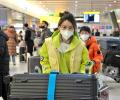
"China has always been publishing information on COVID-19 deaths and severe cases in the spirit of openness and transparency," Jiao Yahui, head of the Bureau of Medical Administration under the National Health Commission, said at a press briefing held.

The move comes in the backdrop of a Radio Free Asia report that nearly 250 million people in China may have been affected by COVID-19 in just 20 days after the 'zero-COVID policy' was diluted in the first week of the month.

President Xi, who attended a meeting in Beijing to double efforts in coordinating the prevention and control of the COVID-19 outbreak, said the epidemic 'has the fastest transmission, widest range of infection and has been the most difficult to prevent and control'.

World Health Organisation (WHO) has sought more information from Beijing on information about an outbreak of pneumonia in northern China that appears to be mostly affecting children, Al Jazeera reported.

In 2023, the number of kindergartens fell by 14,808 to 274,400, the annual report by the Chinese education ministry stated. It is the second consecutive annual decline in the latest indicator of China's falling birth rates.

China has reported the first case of human infection with the H10N3 strain of bird flu from the country's eastern Jiangsu province, China's National Health Commission said.

The latest surge in cases in the last few weeks was a two year high in the country, denting official claims of China being one of the best performers in curbing COVID-19 pandemic.
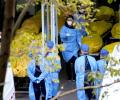
The average age of those who died was 80.3, and 90 per cent of the fatalities were aged 65 or over, the Hong Kong-based South China Morning Post reported.

The former British colony also reported COVID-related 87 deaths taking the overall toll to 3,729, the report said.

The death toll due to nCoV rose to 1,016 and the confirmed cases have gone up to 42,638, according to the commission.
The report came at the time when British-based health data firm Airfinity, said that the infections in China are likely to be more than one million a day with deaths at more than 5,000 a day.
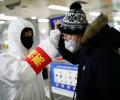
The reality is, the worldwide toll could have been checked within time if China had been more transparent and had warned countries regarding the new strain of Severe Acute Respiratory Syndrome (SARS)-like infection, which originated at a 'wet market' in its province of Hubei late last year.
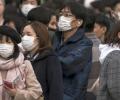
After recording the highest COVID-19 cases in Jilin, the authorities there have barred residents from leaving the province and travelling between cities within it.

As of Friday, the total confirmed cases on the mainland were 82,875. As many as 77,685 patients have been recovered, the NHC said.

The World Health Organization on Thursday had said that a sharp rise in reported COVID-19, (official name for coronavirus) cases in China was due to a change in counting methods and it did not represent a big shift in the epidemic.
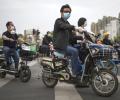
China has opened up the country fully after the coronavirus cases declined. The businesses and factories of the world's second-largest economy have fully opened and are functioning.

Even when China's widely-publicised exchange with the World Health Organisation (WHO) in response to the queries over the reports of surging cases of mycoplasma pneumonia and influenza flu triggered the worldwide alert, including in India, China said the spike in respiratory diseases was due to an 'immunity gap'.

The Wold Health Organisation has granted approval on June 1 to China's second COVID-19 vaccine, Sinovac, which was expected to strengthen China's vaccine diplomacy.
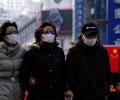
The vaccination, available at 48 designated clinics in 15 districts, began on December 24, targeting certain groups of people aged between 18 and 59 years, He Zhenyu, deputy director of the centre for disease control and prevention in Wuhan, told the media in Wuhan.

Several countries started screening travellers coming from China, especially from Wuhan to detect symptoms like fever.

In his fresh directive, Xi said that more targeted patriotic health campaigns should be conducted as the country's COVID-19 epidemic prevention and control faces new situations and new tasks.
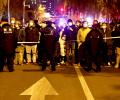
Seeking to address international concerns, foreign ministry spokesman Zhao Lijian said China has been adjusting the zero-COVID policy based on the changing circumstances.
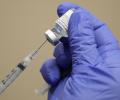
The approval comes a day after Sinopharm said its vaccine showed 79.34 per cent efficacy and a 99.52 per cent antibody-positive conversion rate in the interim results of the Phase III clinical trials.

China's Zero-COVID-19 case policy is increasingly coming under stress as the country is reporting a spike in the number of coronavirus infections from different provinces ahead of the Beijing Winter Olympic Games with over 2,500 people undergoing treatment.

They agreed to continue technical exchanges to help end the epidemic worldwide as soon as possible, it said.

So far about 124 positive cases have been reported in a host of countries, including India where the first case was confirmed in Kerala.

The government has downgraded the risk level of Wuhan for Covid-19 outbreak from high to medium, according to official media reports.
Eighty-six deaths were reported in mainland China with 3,399 fresh cases from 31 provincial-level regions, the country's National Health Commission said on Saturday.

The further expansion and upgrade of the Chinese military does not augur well for India, which continues to confront an increasingly belligerent China on its borders, notes former foreign secretary Shyam Saran.

Confirming the visit, Chinese foreign ministry spokesman Zhao Lijian told a media briefing on Monday that China supported scientists around the world to conduct a global study on the origins and transmission routes of the virus.

The Chinese capital issued a fresh coronavirus alert on Thursday after it reported 21 local COVID-19 infections a day earlier, three of which were from a high school and the rest from a university, health officials said.
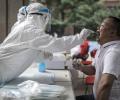
Asymptomatic cases pose a problem as the patients are tested COVID-19 positive but develop no symptoms such as fever, cough or sore throat. However, they pose a risk of spreading the disease to others.
China's National Health Commission said on Wednesday that 93 locally transmitted COVID-19 cases and 16 new imported cases were reported on Tuesday, the highest in a single day in recent weeks.

The global health agency has asked Chinese health officials to share data on genetic sequencing, hospitalisations, deaths and vaccinations.

The overall confirmed cases on the Chinese mainland has reached 44,653 by the end of Tuesday and 1,113 people has died of the disease.

Chinese officials hope the cases will come down in the coming days with more specialised hospitals being set up in Wuhan. China's ministry of science and technology said that a batch of Remdesivir, an antiviral drug, which will be put into clinical trials to test its efficiency on the novel coronavirus (2019-nCoV), is expected to arrive in China soon.
